
PACEs Resources
Understanding the Impact of Adverse Childhood Experiences (ACEs) and the Power of Positive Childhood Experiences (PCEs)
Positive and Adverse Childhood Experiences (PACEs) have become a major focus of comprehensive prevention work nationwide. Explore this page to learn more about PACES research, resources, and calls to action
ACEs and their impacts have been researched for decades, and can include experiences with violence, abuse, growing up in a family with mental health or substance use challenges, experiences with systemic oppression, houselessness, and more. When a child experiences multiple ACEs and/or ACEs over a long period of time, these experiences can lead to toxic stress: Prolonged or excessive activation of the stress response system. ACEs can negatively impact child development and wellbeing, but the impacts can also be mitigated through promoting positive childhood experiences (PCEs).
What are Adverse Childhood Experiences (ACEs)?
What are the
Impacts of ACEs?
Experiencing high levels of stress or trauma can affect how a child’s brain develops and even change the way their genes work. While most people feel stress at some point, long-term or repeated stress (i.e. chronic stress) can be especially harmful to children, because early childhood is such an important time for brain development.
We know that over 50% of ACEs occur by age 3, and experiencing four or more ACEs (e.g., abuse and neglect, growing up around violence, experiencing houselessness, experiencing systemic oppression, etc.) is linked to a higher risk of serious health and behavioral health challenges later in life. These include obesity, autoimmune diseases, diabetes, heart disease, depression, anxiety, addiction, and even a shorter life by up to 20 years. Having multiple ACEs can also lead to struggles in school, difficulty finding or keeping a job, and risky behaviors like smoking or drug use. Research has also found a connection between ACEs and a greater chance of misusing prescription opioids.
Want to learn more? Watch this TED Talk to better understand how ACEs can impact lives.
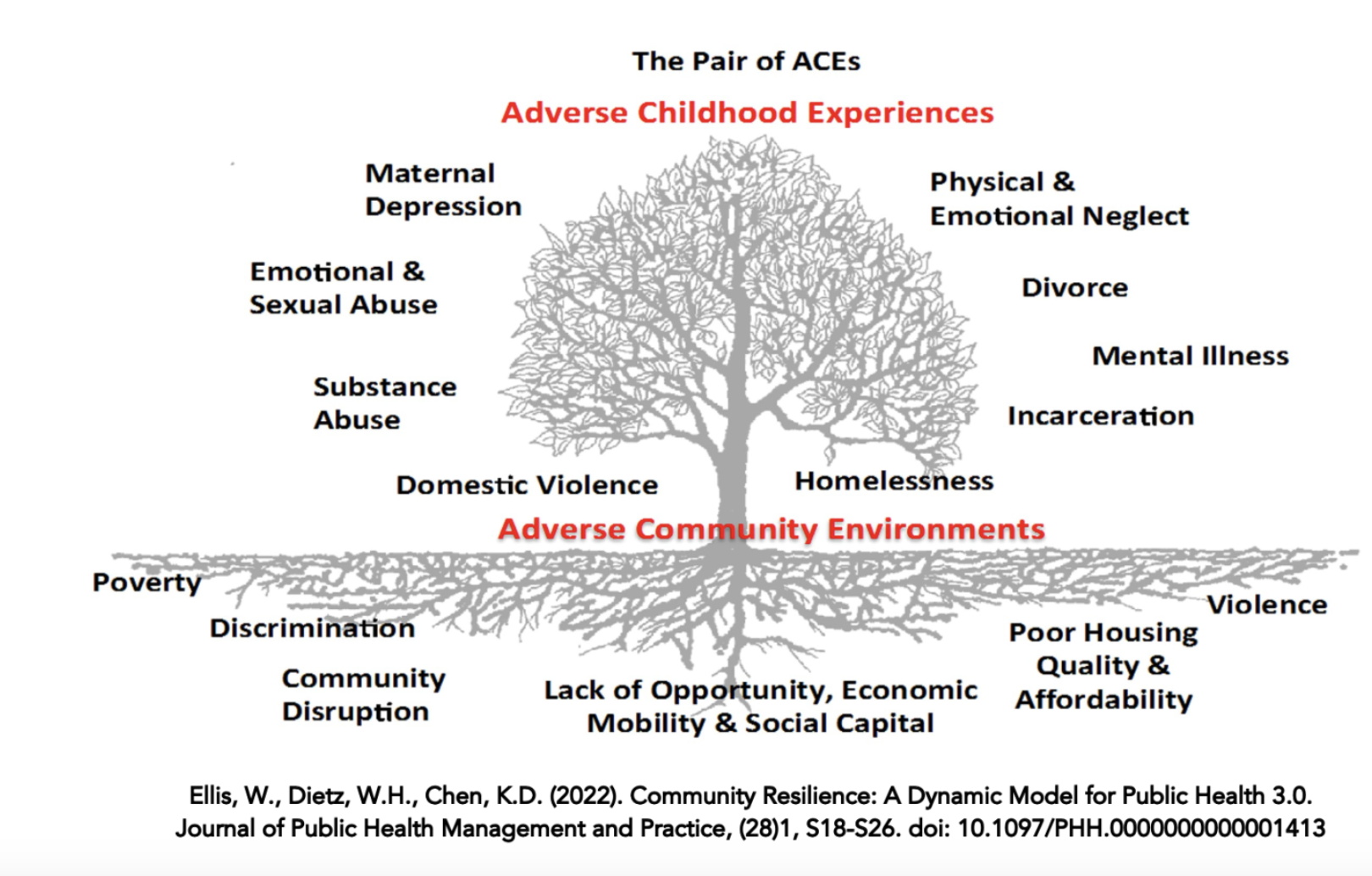
The Pair of ACEs Tree
The Pair of ACEs tree shows how Adverse Childhood Experiences (within families) are connected to Adverse Community Environments. This visual helps explain these complex issues and the interconnectedness between childhood experiences in the context of community environments, making it easier to engage a wide range of partners. By asking “What’s in our soil?” communities can start setting goals and changing policies and practices to build resilience and address root causes of adversity. (Retrieved from Center for Community Resilience: BCR Approach)
Preventing the Impacts of ACEs
While the connection between ACEs and negative outcomes later in life has been well-documented, a 2019 report focuses on implementing comprehensive public health approaches to prevent ACEs. Watch this video to learn more about preventing ACEs.
Positive Childhood Experiences Buffer the Impacts of Stress & Trauma
That’s right! We know that positive experiences in childhood reduce the negative impacts of ACEs, even for people who have experienced significant adversity.

There are many important individual, family, and community conditions that can support resilience and reduce the negative impacts of ACEs, such as:
Close and stable relationships with reliable caregivers or other caring adults
A sense of purpose and belonging (e.g., hobbies, creative outlets, culture, identity, faith, and more)
Community connectedness and positive social norms that are supportive and prevent violence
Problem-solving, emotion regulation and co-regulation skills
Social connections and a sense of belonging
Economic and concrete support for caregivers and families

Breaking Cycles of Trauma & Abuse
Talking about child abuse and neglect can feel difficult and overwhelming, but these conversations are crucial to support survivors and help break cycles of violence. Oregon Abuse Advocates & Survivors in Service (OAASIS) offers spaces for survivors, allies, and advocates to show up fully. Learn more about their work and check out their Events page for opportunities to connect!
There are so many ways you can get involved in this important work! Explore the resources below, or scroll all the way down to “Key Actions for Impact” to learn more about ways you can take action today!

Oregon Resources
Trauma Informed Oregon
TIO works in partnership with Oregon providers, families, and advocates to promote and sustain trauma informed policies and practices across physical, mental, and behavioral health systems and to share promising strategies to support wellness and resilience.e.
Trauma Responsive Training for Professionals working with Children and Families
PCAO is proud to be partnering with Doctor Amy King to provide Trauma-Informed training, education and consultation to child and family serving providers across the state. Learn more and register here for the free, self-paced course.
National Resources
Center for Disease Control and Prevention
The Center for Disease Control and Prevention is the nation’s leading public health agency. The CDC’s mission is to protect public health and safety by preventing and controlling disease, injury, and disability both domestically and internationally. Explore CDC resources on ACEs and prevention!
Healthy Outcomes from Positive Experiences (HOPE)
HOPE provides a helpful framework for our communities and systems of care to better ensure that all children have more positive experiences and that all families have support to nurture and celebrate their strengths. Explore the HOPE Framework!
PACES Connection
PACEs Connection has become a hub for the PACEs movement. Between 2012-2021, PACEsConnection grew from 200 members and no community sites, to more than 52,000 people from every state in the U.S. and more than 40 countries, with more members joining daily. Explore Oregon PACEs Connection members here.


Key Actions for Impact
Spread the Word: Share this information far and wide. Awareness is the starting point for change.
Get involved with PCAO’s Child Abuse Prevention Collaborative.
Register for the self-paced Trauma-Responsive Training for Professionals working with Children and Families to learn more about how to be a supportive adult to children and a resource for families!
And more! See below.